The miracle of ambitious creative works
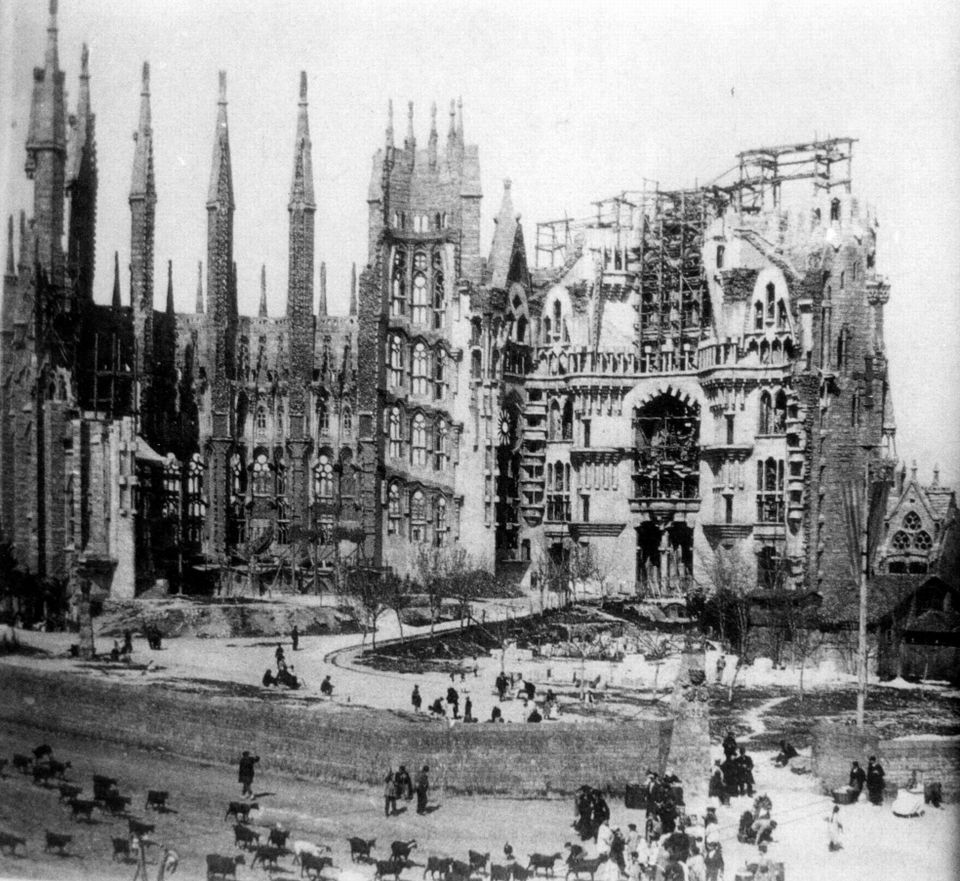
Barcelona's famed architect, Antoni Gaudí, died 100 years ago today.
Tonight, Pope Leo XIV will stand inside the Sagrada Família and bless its final tower, the Tower of Jesus Christ. Workers set the last section of the cross in place this February, 144 years after the first stone was laid. The Sagrada Família is now the tallest church in the world.
I'm long overdue on a newsletter update, but this felt like the right moment to share some ideas about Gaudí I've been sitting with for a while. For the past few months I've been head down on an ambitious creative project with my good friend Emily Ferguson. We're building an immersive narrative audio tour about Gaudí, told through the many people who lived and worked alongside him and fueled his architectural vision. The tour ends, as his funeral did, at the Sagrada Família.
After reading many biographies about Gaudí and reviewing thousands of archival images and articles, three things I learned have changed how I think about the creative ambition of the Sagrada Família.
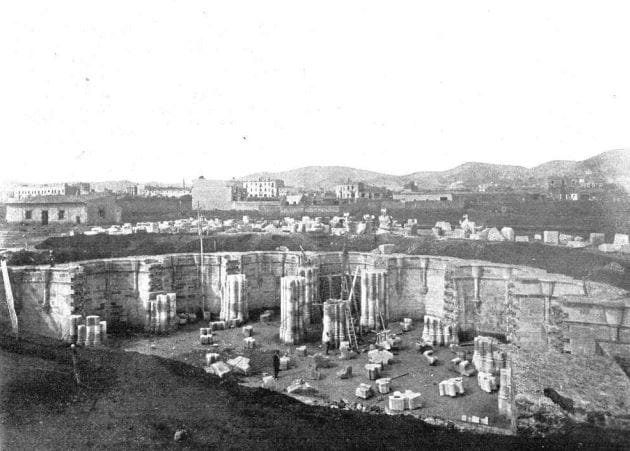
1. The original idea didn't come from Gaudí. The vision of a Catholic church dedicated to the Holy Family came from a bookseller, Josep Maria Bocabella i Verdaguer, in 1866. Francisco de Paula del Villar was the first architect on the project. Gaudí took over in 1883 and was granted approval to take the design in a radically new direction. Both Bocabella and Gaudí are buried in the crypt.
2. It was built by the community that surrounds it. The Sagrada Família has often been called the cathedral of the poor. Much of the early construction was funded by alms from people living in what was then an impoverished working-class corner of the city. Gaudí designed and built a school on the property and preferred giving tours to local children over visiting dignitaries. Many of the sculptures are cast from locals (and animals!) who lived in the surrounding streets.
3. It almost didn't happen. Repeatedly. The project nearly collapsed several times for financial reasons. It was somehow spared during the Setmana Tràgica of 1909, when crowds burned churches across Barcelona to the ground. During the civil war, the church was looted and most of Gaudí's original plans and models were destroyed. His colleagues had documented enough of his work to reconstruct his vision from what remained.
It also survived its many critics. Pablo Picasso reportedly wrote in a letter to a friend that he should "send Gaudí and the Sagrada Família to hell." George Orwell called it one of the most hideous buildings in the world and wrote that "the anarchists showed bad taste in not blowing it up when they had the chance."
The Catholic Church has declared Gaudí venerable, meaning he's just two authenticated miracles away from sainthood. Authenticated miracles tend to fall in the scientifically unexplained medical healing category. But in my mind, the fact that the Sagrada Família even exists today is its own miracle.
Any ambitious project that starts as a seed in one person's mind, and is then shaped and molded as it fights its way to exist in the world, is its own miracle of creation.
And this was never one man's project. It wasn't even originally his idea. Nine architects. Thousands of artisans. The alms of a poor neighborhood, and later the tickets of millions of visitors. A city that refused to let the project fail.
It has also become something much larger than a Catholic place of worship. Today the Sagrada Família is visited by people of all faiths, atheists and agnostics alike. My theory is that this mass appeal stems from Gaudí's philosophy about originality coming from a return to the origin. To stand inside is to stand in a structure born of nature. The columns rise like trees in a forest, blooming in rich colors, as Mediterranean light cuts across the transept. The feeling of standing in awe of something truly unique that is also comfortably familiar.
And yet, even after tonight's blessing, it isn't finished. There is at least another decade of planned work on the Sagrada Família.
Maybe that's for the best. And Picasso, of all people, makes the case in a later interview: "Woe to you the day it is said that you are finished! To finish a work? To finish a picture? What nonsense! To finish it means to be through with it, to kill it, to rid it of its soul, to give it its final blow."
It is almost impossible to imagine the Sagrada Família as a completed work aging in place. Perhaps its fate is to keep evolving in tandem with the city of Barcelona and the community of thousands who left their mark on the building. None more so than the individuals entombed in her crypt.
That's the reminder I'm taking from this anniversary. The end goal of an ambitious creative work shouldn't just be to finish it. To get it done, and move on. I think it's critically important to do everything you can to get creative work to a point where it can exist in the world. But just like the Sagrada Família, existing doesn't have to mean done. A work can live in conversation with its audience and the community of people contributing to it. It can continue to have a life and soul of its own.
And with that, I turn back to my unfinished script.
More on the Gaudí tour soon. I'm aiming to send these updates monthly from here on, and I'd love to hear what you're working on, finished or not.